How Long Does a Dog Wear a Cone After Desexing? (And How to Make It Easier)
Posted on October 25 2026


Your dog is home from desexing, a little groggy and wearing a cone they clearly didn't ask for. It's a big day for both of you. The good news is that the cone part is short, and there's plenty you can do to make it easier.
The short answer: most dogs wear a cone for 10 to 14 days after desexing, until the wound has healed and their vet has checked it (and removed the stitches, if they aren't the dissolving kind). Your own vet's instructions always come first, because healing time depends on the surgery, the stitches used and how your dog is going.
Why the cone matters
Dogs lick wounds by instinct, but licking does more harm than good after surgery. It can pull out stitches, open the wound and bring in infection. A cone keeps their mouth away from the incision while it heals. That's why vets ask for it to stay on day and night, including while you're out and while they sleep. A lot of licking happens when nobody is watching.
How long to keep it on
- Usually 10 to 14 days. Vet clinics usually book a check-up 10 to 14 days after desexing. Many dogs have dissolving stitches that don't need removing, but they still need that check.
- Keep it on until your vet says it can come off. A wound can look healed on the outside before it's strong underneath, so don't take the cone off early because things look fine.
- It may need longer. If the wound is slow to heal or your dog keeps going for it, your vet may ask you to keep the cone on for a few more days.
When to call your vet
Check the wound every day. Call your vet if you notice:
- redness, swelling or bleeding at the wound
- discharge, a gap in the wound, or missing stitches
- your dog licking or chewing the area despite the cone
- vomiting, refusing food, or still being very sleepy more than 24 hours after surgery
Don't clean the wound or put creams on it unless your vet tells you to. Hold off on baths and swimming until your vet has checked it, usually 10 to 14 days.
Helping your dog live with a cone
Most dogs adjust within a day or two. These small changes help.
- Food and water: use bowls narrower than the cone, and raise them a little so your dog doesn't have to push the cone into the floor. If your vet is happy for the cone to come off at mealtimes, stay with your dog the whole time and put it straight back on.
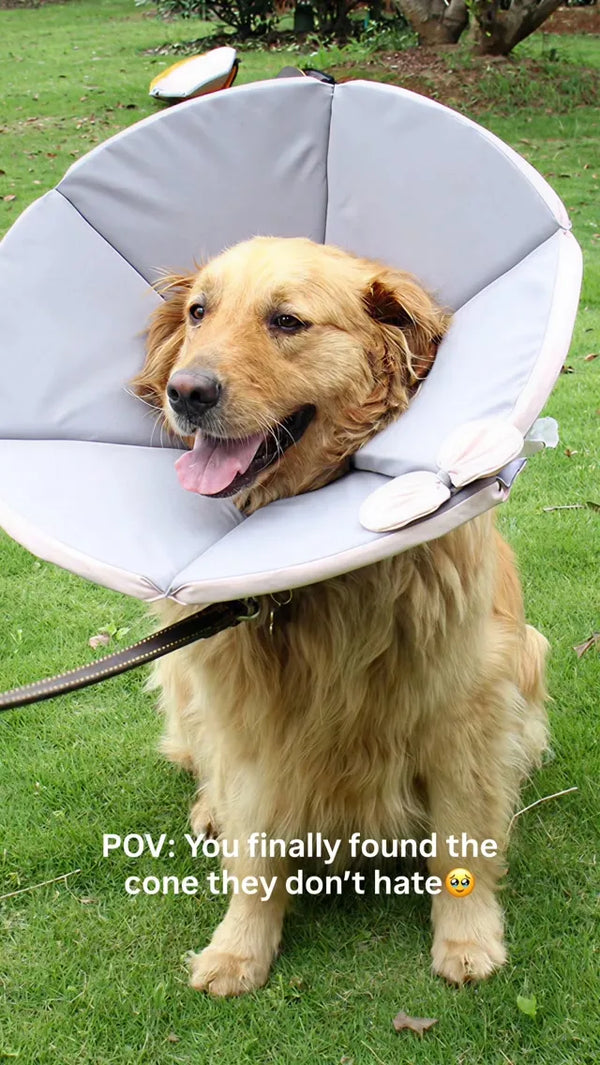
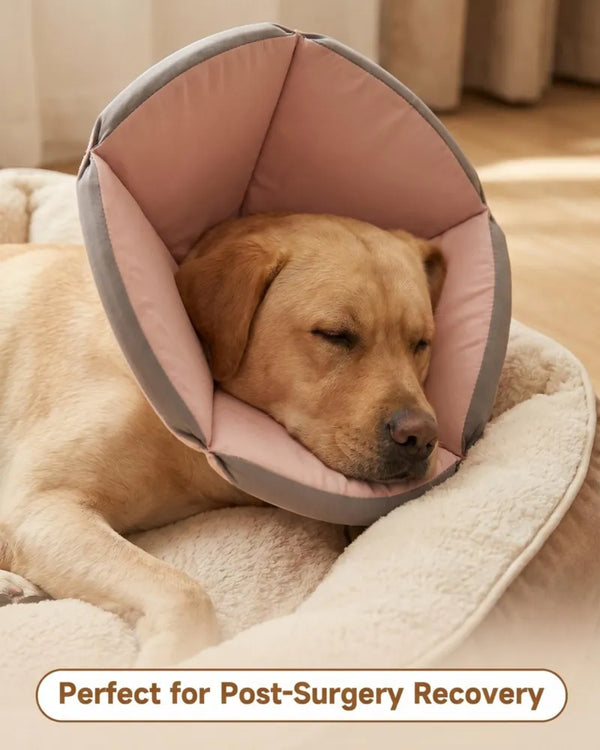
- Sleeping: give them a soft, roomy bed where they can lie flat. A soft cone bends instead of digging in, and our customers often tell us their dogs end up using it as a pillow.
- Getting around: clear narrow gaps, and move anything a stiff cone might knock over. Watch your dog on stairs and in doorways for the first day.
- Rest: keep things calm while they heal. That means no running, jumping on and off furniture, stairs or rough play, and short lead walks just for toilet breaks. Some dogs need a small room or crate to keep them still.
- Boredom: resting dogs get bored. Gentle sniffing games, like a few treats tucked into a nosework toy, keep their brain busy without much movement. Check they can reach the toy with the cone on.
Plastic cone, soft cone, inflatable collar or recovery suit?
There's no single best option. It depends on where the wound is and on your dog. Here's how they compare.
| Type | Good for | Watch out for |
|---|---|---|
| Hard plastic cone | The most protective option, and what most clinics send home. | Noisy, bumps into everything, blocks side vision, and makes eating and sleeping awkward. |
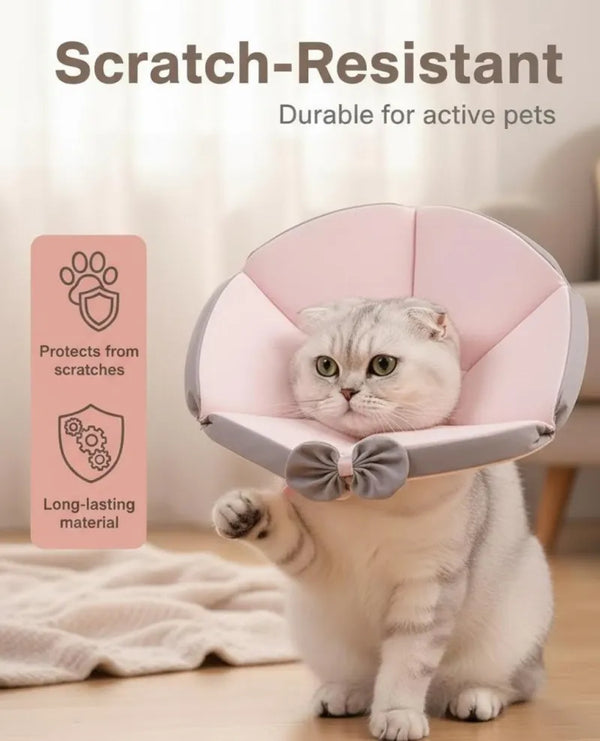
| Soft padded cone | A comfier, quieter cone. Dogs can eat, drink and sleep more easily, and it doesn't scratch walls or legs. | A determined licker or a big, strong dog may bend a soft cone and reach the wound. Watch closely on day one. |
| Inflatable collar | Dogs can see around it, and it's easy to sleep in. | Long-necked or flexible dogs can often reach their belly, legs or tail. Sharp teeth can puncture it. |
| Recovery suit | Covers belly wounds, like a spay, without blocking vision. | Doesn't cover legs or tail, and needs managing at toilet time. |
Ask your vet which option suits your dog's surgery, and whether a well-fitted soft cone is fine instead of plastic. Whatever you use, the test is simple: your dog must not be able to reach the wound.
How to fit a soft cone
- Measure the neck where their collar sits, with a soft tape measure.
- Check the length. The cone should reach a little past the tip of your dog's nose. For long-nosed breeds, measure from the collar to the nose tip and compare it with the cone depth.
- Fasten it snugly. You should be able to slide two fingers under it, but it shouldn't slip over their head.
- Do a lick test. Watch your dog try to reach the wound for a few minutes. If they can get to it, go up a size or ask your vet about a firmer option.
Our Soft Recovery Cone comes in 7 sizes, from XS (neck 16–20cm, 11cm deep) to XXXL (neck 49–54cm, 25cm deep). If your dog falls between two sizes, go one size up. It's padded, water-repellent and machine washable, and it suits cats too.
Quick answers
Can my dog sleep without the cone?
Not until your vet says so. Night-time is when a lot of unsupervised licking happens.
Can I take the cone off for meals?
Only if your vet is happy with that, and only while you're right there watching. Put it back on as soon as they've finished.
When can my dog go back to normal walks and play?
Usually after the 10 to 14 day check, once your vet is happy with the wound.
Should I buy a cone before the surgery?
It helps. Having a soft cone ready means you can swap from the clinic's plastic one as soon as your vet is happy, without waiting for delivery. We dispatch orders within 1–2 business days from Brisbane.
This guide is general information, not veterinary advice. Always follow your own vet's instructions for your pet. Sources: Greencross Vets desexing aftercare, PDSA post-surgery care.